
Battleplan Review: Is This Innovative World War II RTS Worth Your Time?
Read our comprehensive Battleplan review to discover how this unique WW2 real-time strategy wargame handles operational command, logistics, and planning.
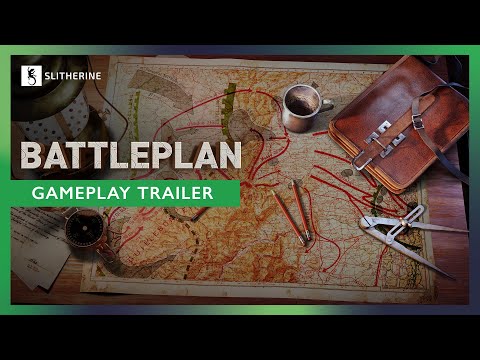 Official mediaRead our comprehensive Battleplan review to discover how this unique WW2 real-time strategy wargame handles operational command, logistics, and planning.YouTube
 When strategy enthusiasts look for a fresh spin on historical wargaming, titles that genuinely test operational thinking are rare. If you have been following the latest releases, our Battleplan review breaks down whether this tactical simulator succeeds or falls flat. Finding a deep military simulation that balances high-level planning with frontline execution is no small feat, which is why a thorough Battleplan review is essential before you enlist. Developed by Foolish Mortals Games Inc. and published by Slitherine Ltd., this title attempts to shift the real-time strategy paradigm away from micro-managing individual units and toward drafting comprehensive operational orders across massive historical fronts.
What is Battleplan? Core Concepts and Mechanics
At its core, the game places you firmly in the general's chair. Rather than clicking on individual squads to micro-manage every firefight, you focus on the broader operational picture. You determine where to concentrate your forces, how to orchestrate advancements, and how to maintain steady supply lines.
Community reports and early player experience indicate that approaching the title like a traditional real-time strategy game leads to swift defeat. Success requires a methodical shift in mindset. Before a mission begins, you meticulously assemble your battle group. The composition of your forces matters immensely, forcing you to consider how different military branches will coordinate during the upcoming push.
Once on the map, you draw orders directly onto the terrain. You assign formations, designate objectives, and utilize a military chain of command to bring your strategy to life. The entire simulation plays out in real time, though integrated pause and speed controls give commanders the chance to assess the situation at their own pace. Furthermore, persistence between battles ensures your troops gain experience and require proper resupply, transforming abstract map symbols into a cohesive force you genuinely care about.
| Game Element | Traditional RTS | Battleplan Approach |
|---|---|---|
| Unit Control | Constant micro-management of squads | High-level operational planning and orders |
| Pace | Fast, twitch-based reflexes required | Methodical execution with pause/speed controls |
| Campaign Persistence | Standalone matches or resets | Long-term battle groups with veterancy and logistics |
| Map Interaction | Direct clicking and dragging | Drawing multi-stage plans directly onto real-world geography |
The Operational Canvas: Massive Battlefields and Realism
One of the most striking aspects highlighted in community discussions is the sheer scale of the conflict. The developers utilized real-world geographic data to model thousands of kilometers of terrain. Every forest, river, swamp, and road sits exactly where it did historically, meaning commanders must genuinely study elevation maps to position artillery on high ground or secure critical road networks.
When you dive into a campaign, missions are designed to simulate massive month-long operations second by second. This level of fidelity means that logistics play a massive role in your strategic survival.
| Feature Category | Implementation Details | Tactical Impact |
|---|---|---|
| Geographic Mapping | Real-world elevation and terrain data | Dictates line of sight, movement speed, and artillery placement |
| Logistics Simulation | Supply lines, depots, and terrain flow | Starves enemy pockets or traps overextended friendly units |
| Chain of Command | Headquarters, regiments, battalions, companies | Enables autonomous execution of multi-stage tactical orders |
| Historical Integration | Geo-tagged historical photos and videos | Enhances immersion by tying digital battles to real-world locations |
According to player feedback, mastering these supply mechanics is vital. Cutting off enemy supply routes or protecting your own logistic arteries determines whether your frontlines hold or collapse into chaos. You can check out more details, system requirements, and user reception directly on the official Steam store page for Battleplan.
The Highs: Why General-Level Command Shines
When everything clicks, the experience is profoundly rewarding. Stepping back from minute-by-minute firefights allows you to appreciate the grand scale of your strategy. There is an undeniable thrill in orchestrating a complex, multi-stage offensive.
Community consensus points out several standout positive aspects:
- Strategic Satisfaction: Setting up a preparatory artillery barrage, pushing through a fortified line, and successfully developing an encirclement feels remarkably authentic.
- Army Building: Customizing your order of battle, hiring and firing division officers, and watching your troops gain veterancy creates deep attachment to your virtual soldiers.
- Meaningful Terrain: Ground conditions, reconnaissance data, and combined arms tactics genuinely influence the outcome of your operations.
- Pacing Control: The ability to pause and fast-forward lets you manage the grand scope of multi-week battles without burning out on micro-management.
| Positive Aspect | Description | Player Reception |
|---|---|---|
| Operational Flow | Watching a planned maneuver unfold across the map | Highly praised for strategic depth |
| Officer Management | Hiring, firing, and tracking officer quirks | Adds a layer of personal attachment |
| Combined Arms | Integrating armor, infantry, and engineering units | Encourages thoughtful force composition |
The Lows: Information Overload and Interface Friction
Despite its innovative mechanics, our review must address significant pain points voiced by early adopters. The most prominent community complaint centers around information clarity and user interface feedback during heated engagements.
While war is inherently chaotic, players frequently report struggling to understand why units are failing to execute orders. When multiple formations carry out multi-step plans simultaneously, the map becomes heavily cluttered with overlapping arrows and tactical markers.
| Frustration Factor | Symptom | Gameplay Consequence |
|---|---|---|
| Map Clutter | Tangled webs of overlapping operational arrows | Extremely difficult to read battle developments at a glance |
| Notification Overload | Constant, high-volume alerts during hectic phases | Hard to separate critical warnings from background noise |
| AI Competency | Enemy AI defense often feels more cohesive than player lines | Results in confusion over whether failure stems from bad plans or bad execution |
| Supply Inconsistencies | Units running dry despite intact communication lines | Frustrating setbacks due to opaque logistical feedback |
These interface hurdles occasionally transform satisfying strategic tension into sheer confusion. When you cannot easily decipher whether a defeat was caused by a flawed tactical plan or a misinterpretation by your subordinates, frustration naturally sets in.
Is It Worth Your Enlistment? Verdict and Pricing
Weighing the pros and cons, this WW2 strategy title earns a conditional recommendation for dedicated wargamers. If you crave a simulation that prioritizes grand strategy and operational planning over fast-paced clicking, it delivers a uniquely immersive experience.
| Evaluation Metric | Score / Standing | Summary |
|---|---|---|
| Innovation | High | Fresh take on command-line drawing and autonomous execution |
| Immersion | Strong | Realistic logistics, massive maps, and historical depth |
| UI Clarity | Needs Improvement | Overlapping markers and notification spam hinder readability |
| Overall Value | Positive with Caveats | Fairly priced around the $30 mark for niche enthusiasts |
For players willing to weather some rough edges, learning curves, and interface quirks, the journey is well worth taking. However, if you easily lose patience with dense tactical UIs and unclear order execution, you might want to wait for a few stability patches and quality-of-life updates to roll out.
Frequently Asked Questions
What kind of game is Battleplan?
It is a real-time strategy wargame focused on World War II, where players take on the role of a general, drawing operational plans directly onto maps and watching subordinate officers carry them out autonomously.
How does the Battleplan review score compare to user ratings?
User ratings on Steam currently sit at Mixed (around 67% positive), reflecting praise for its innovative command mechanics balanced against criticisms regarding interface clarity and notification spam.
Can I play Battleplan at my own pace?
Yes, the game features robust time manipulation tools, allowing players to pause, play in real time, or fast-forward through massive, multi-week historical campaigns.
What are the system requirements to run Battleplan?
Minimum requirements are modest, requiring a 64-bit Windows 10/11 operating system, 4 GB of RAM, and a basic dedicated GPU like an Nvidia GeForce GT 1030 or AMD Radeon RX 460, making it accessible on most modern rigs.
Related guides
Battleplan Reddit Community Insights: Is This New WW2 Strategy Game Worth Your Time?
Dive into the latest Battleplan Reddit discussions and player feedback to see if this new WW2 grand strategy simulation is right for your gaming library.
Battleplan vs Hearts of Iron: Comparing Grand Strategy Mechanics and New Tactical Wargames
Explore the differences and connections in the Battleplan vs hearts of iron debate, analyzing combat mechanics, planning phases, and tactical execution.
Join the Battleplan Discord Community for Tips, Updates, and Strategy Guides
Connect with players on the Battleplan Discord to share tactics, master WW2 logistics, and discuss Foolish Mortals Games' latest grand strategy title.