
Battleplan vs Hearts of Iron: Comparing Grand Strategy Mechanics and New Tactical Wargames
Explore the differences and connections in the Battleplan vs hearts of iron debate, analyzing combat mechanics, planning phases, and tactical execution.
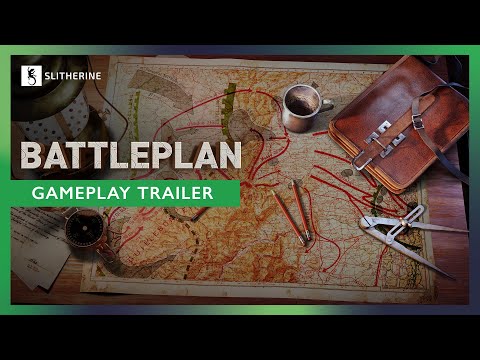 Official mediaExplore the differences and connections in the Battleplan vs hearts of iron debate, analyzing combat mechanics, planning phases, and tactical execution.YouTube
 When strategy enthusiasts dive into the nuances of a Battleplan vs hearts of iron comparison, they are exploring how macro-level management translates into simulated warfare. Understanding the mechanics behind a Battleplan vs hearts of iron breakdown helps players master both grand strategy frameworks and upcoming focused wargames.
Grand Strategy Roots vs. Dedicated Tactical Wargames
The inspiration for modern tactical wargames often traces back to the systems popularized by Paradox Interactive. When examining a Battleplan vs hearts of iron scenario, players instantly notice the shared DNA in front-line creation, division management, and automated offensive moves.
However, the core design philosophy differs significantly. While titles like Hearts of Iron IV focus heavily on the grand strategy layer—encompassing production lines, political maneuvering, research trees, and global diplomacy—upcoming projects like Foolish Mortals Games' Battle Plan isolate the military engagement loop. Instead of managing an entire nation's wartime economy, commanders in dedicated battle-focused titles step directly into a World War II operational sandbox.
| Feature Category | Hearts of Iron IV Approach | Dedicated Battle Plan Approach |
|---|---|---|
| Scope | Global grand strategy and nation management | Focused operational campaigns and missions |
| Economy | Factories, trade laws, and resource stockpiles | Requisition points and unit reinforcements |
| Timeframe | Sandbox spanning the entire global conflict | Structured missions with specific time limits |
| Micromanagement | Balanced between macro plans and unit shuffling | Heavy emphasis on macro-level chain of command |
Community reports indicate that simplifying the macro nation-building elements allows developers to concentrate deeply on realistic topology, unit logistics, and intricate daily planning phases. Players looking for a pure general's hat experience often prefer this streamlined approach over navigating complex political focuses.
The Mechanics of Drawing Battle Plans
At the heart of both systems lies the sophisticated interface used to orchestrate troop movements. Setting up a comprehensive offensive requires far more than simply clicking and dragging units across a map.
In standard grand strategy play, drawing front lines and offensive arrows minimizes tedious unit micro-movement while granting vital planning bonuses. Players can coordinate complex multi-front operations, execute naval invasions, and orchestrate paradrops by timing their orders carefully.
| Order Type | Primary Function | Key Requirements & Limitations |
|---|---|---|
| Front Line | Establishes a staging area along a border | AI distributes divisions automatically; grants planning bonuses |
| Offensive Line | Directs army advances toward deep objectives | Width and arc can be adjusted for focused pushes |
| Spearhead | Narrow, one-province-wide armored thrusts | Ideal for blitzkrieg encirclements; bypasses heavy fortifications |
| Fallback Line | Controlled retreat points for defense | No planning bonus, but accumulates entrenchment over time |
According to community feedback and official game wikis, utilizing these specialized orders correctly dictates the flow of engagement. For instance, executing a successful spearhead allows armored divisions to punch deep behind enemy lines, creating pockets and cutting off supply routes before infantry divisions can reinforce the gap.
Planning Bonuses and Combat Efficiency
Time is an essential asset in any military campaign. Both systems reward patience and meticulous preparation through the accumulation of planning bonuses.
When divisions sit stationary along a hostile border with an active order, they gradually build up a planning bonus. This modifier directly boosts attack and breakthrough capabilities, often offsetting the severe defensive advantages held by entrenched enemies.
| Factor | Standard Value | Modifiers & Influences |
|---|---|---|
| Base Daily Gain | +2% per day | Increased by general traits and land doctrines |
| Maximum Cap | 30% (default) | Can be raised via officer spirits and national focuses |
| Decay Rate | 1% per day (AI managed) | Jumps to 3% per day if manually commanded |
| Planning Speed | Standard accumulation | Boosted heavily by abilities like Staff Office Plan |
Player experience demonstrates that rushing into battle without letting your forces prepare often results in disastrous stalemates. However, maintaining that bonus requires restraint; issuing manual commands causes the planning meter to decay rapidly, forcing commanders to weigh the benefits of automated AI execution against the precision of manual micromanagement.
Amphibious Landings and Airborne Operations
Executing complex cross-water invasions or dropping troops behind enemy lines represents the pinnacle of operational planning. Both paradigms treat these maneuvers with extreme mechanical depth.
Naval invasions require careful coordination of naval supremacy, convoy allocations, and strict division caps. Meanwhile, airborne drops demand adequate transport planes, sufficient fuel reserves, and strict control over regional airspace.
| Operation Type | Core Prerequisites | Major Risk Factors |
|---|---|---|
| Naval Invasion | Transport ships, landing craft tech, >50% naval supremacy | Heavy amphibious attack penalties; vulnerable supply lines |
| Paradrop | Min 50 transport planes, 45 planes per division, 70% air superiority | Severe organization loss, potential disruption damage |
| Area Defense | Garrison orders assigned to specific states | Spread-out forces vulnerable to concentrated local attacks |
For further details on how tactical command elements are structured, you can review the Hearts of Iron 4 Wiki Guide for comprehensive breakdowns on order tooltips and naval intel efficiency.
The Evolution of Strategy Gaming
As the genre expands, developers continue to experiment with how players interact with military simulations. Whether you enjoy the all-encompassing geopolitical simulation of a grand strategy sandbox or prefer the focused operational puzzles of a dedicated wargame, the core principles of organization, logistics, and timing remain unchanged.
Players eagerly awaiting new titles in the strategy space continue to compare these systems to find the ultimate balance between high-level command and immersive combat realism.
Frequently Asked Questions
What is the main difference in a Battleplan vs hearts of iron comparison?
The primary difference lies in the scope of the game. Hearts of Iron is a grand strategy title encompassing global economics, politics, and research, whereas dedicated battle-focused titles zoom in exclusively on tactical World War II operational campaigns and military maneuvers.
How do planning bonuses affect combat performance?
Planning bonuses increase a division's attack and breakthrough statistics by 1% for every 1% of planning accumulated. This mechanic rewards players who take time to prepare their offensive lines before launching an attack against entrenched enemies.
Can battle plans be executed automatically by the AI?
Yes. Once you draw front lines, offensive lines, or fallback lines, the AI manages the movement and execution of your divisions, significantly reducing the need for constant manual micromanagement during large-scale wars.
Related guides
Battleplan Reddit Community Insights: Is This New WW2 Strategy Game Worth Your Time?
Dive into the latest Battleplan Reddit discussions and player feedback to see if this new WW2 grand strategy simulation is right for your gaming library.
Battleplan Review: Is This Innovative World War II RTS Worth Your Time?
Read our comprehensive Battleplan review to discover how this unique WW2 real-time strategy wargame handles operational command, logistics, and planning.
Join the Battleplan Discord Community for Tips, Updates, and Strategy Guides
Connect with players on the Battleplan Discord to share tactics, master WW2 logistics, and discuss Foolish Mortals Games' latest grand strategy title.